


Sydney’s climate is famously unpredictable. One week you’re battling sticky humidity, the next you’re reaching for a jumper on a cool morning. This variability makes choosing the right heating and cooling system a genuine challenge for homeowners. Reverse cycle aircon installation in Sydney has become one of the most popular solutions, offering year-round comfort from a single, efficient unit. Here’s why it’s worth considering.
What Makes the Reverse Cycle Different?
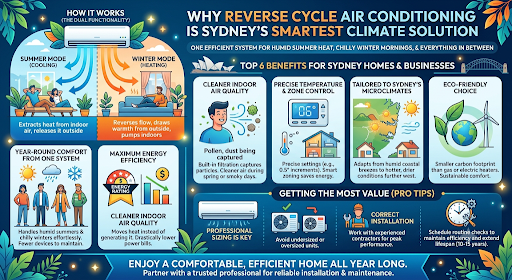
Unlike standard air conditioners that only cool a space, reverse cycle systems can both heat and cool by reversing the direction of refrigerant flow. In summer, the system extracts heat from indoor air and releases it outside. In winter, it reverses the process, drawing warmth from the outside air and pumping it indoors. This dual functionality makes it a genuinely all-season solution rather than a seasonal appliance.
Year-Round Comfort From One System
Sydney households often deal with mild winters and hot, humid summers, sometimes within the same week. Rather than running separate heating and cooling appliances, a single reverse cycle unit handles both. This means fewer devices to maintain, less clutter, and one system that adapts to whatever the sky throws at you. For anyone considering reverse cycle aircon installation in Sydney, this flexibility is often the biggest deciding factor.
Energy Efficiency That Saves Money
Reverse cycle systems are widely regarded as one of the most energy-efficient ways to heat and cool a home. Rather than generating heat directly, they move existing heat from one place to another, which requires significantly less electricity than traditional heaters or resistance-based systems. Over a full year, this efficiency translates into noticeably lower power bills compared to running separate single-purpose units.
Better Indoor Air Quality
Many reverse cycle systems come equipped with built-in filtration that captures dust, pollen, and other airborne particles. This is particularly valuable during Sydney’s spring pollen season or on smoky days when bushfire haze affects air quality. Cleaner indoor air benefits everyone in the household, but especially those with allergies, asthma, or other respiratory sensitivities.
Precise, Consistent Temperature Control
Reverse cycle systems allow for precise temperature settings, often adjustable in increments of half a degree. This level of control means rooms stay consistently comfortable without the temperature swings common with older heating or cooling methods. Many models also offer zoning options, letting you heat or cool specific rooms rather than the entire house, which further reduces unnecessary energy use.
Ideal for Sydney’s Suburban Climate Variations
Suburbs across Greater Sydney experience different microclimates, from the coastal breezes near the harbour to the hotter, drier conditions further west. A well-installed reverse cycle system adapts to these local conditions effectively. Residents seeking reverse cycle air conditioning installation in Bankstown, for instance, benefit from systems calibrated to handle the area’s warmer summer extremes alongside cooler winter nights.
Long-Term Reliability With Proper Servicing
Like any HVAC system, reverse cycle units perform best when serviced regularly. Routine checks catch refrigerant leaks, dirty filters, or worn components before they cause breakdowns or spike electricity usage. Homeowners relying on dependable reverse cycle air conditioning service in Bankstown can extend the lifespan of their system significantly while maintaining consistent performance through every season.
Environmentally Friendlier Than Traditional Heating
Because reverse cycle systems move heat rather than generate it through combustion or resistance elements, they typically have a smaller carbon footprint than gas heaters or electric radiators. For environmentally conscious households, this makes reverse cycle air conditioning an appealing choice that balances comfort with sustainability.
Getting the Installation Right
The performance and efficiency of a reverse cycle system depend heavily on correct sizing and professional installation. An undersized unit will struggle to keep up with Sydney’s extreme days, while an oversized one wastes energy cycling on and off. Working with an experienced air conditioning contractor ensures the system is sized correctly for your home, installed to manufacturer specifications, and set up for optimal long-term performance.
Final Thoughts
Reverse cycle air conditioning offers a practical, efficient answer to Sydney’s ever-changing climate. From consistent year-round comfort and lower energy bills to improved air quality and environmental benefits, it’s easy to see why so many homeowners are making the switch.
Choosing the right system size, installer, and ongoing maintenance plan ensures you get the most value out of your investment for years to come. And if you are looking for experts to help, then AK Air Conditioning & Electrical Quality Service Pty Ltd is your premier destination. Connect with us now before it is too late.
Faq About Reverse Cycle Air Conditioning
- What is the difference between reverse cycle air conditioning and a standard split system?
A standard split system typically only cools a space, while reverse cycle units can both heat and cool by reversing the refrigerant flow direction.
- Can reverse cycle air conditioning really replace my gas heater?
Yes, in most cases. Reverse cycle systems are efficient enough to fully replace gas heating for typical Sydney homes, often at a lower running cost.
- How much does reverse cycle air conditioning cost to run?
Running costs vary by unit size and usage, but reverse cycle systems are generally cheaper to operate than resistance-based heaters or older AC units.
- Is reverse cycle air conditioning suitable for humid Sydney summers?
Yes, most systems include dehumidification functions that help manage humidity alongside temperature control.
- How often should a reverse cycle system be serviced?
Annual servicing is generally recommended to maintain efficiency and catch potential issues early.
- Can one reverse cycle unit heat and cool an entire house?
It depends on the system type. Ducted reverse cycle systems can cover a whole home, while single split units are best suited to individual rooms or zones.
- Do reverse cycle systems work well in older Sydney homes?
Yes, with proper assessment and installation, reverse cycle systems can be fitted into most older homes, though ducting options may vary based on layout.
- How long does a reverse cycle air conditioner typically last?
With regular maintenance, most systems last between 10 and 15 years, depending on usage and build quality.
- Is reverse cycle air conditioning noisy?
Modern units are designed to run quietly, with indoor components typically producing minimal noise during operation.
- What size unit do I need for my home?
Unit size depends on room dimensions, ceiling height, insulation, and sun exposure. A professional assessment is the best way to determine the right capacity for your space.
